Which iPhone should you buy in 2026? The answer depends on budget, photography, screen preference and how long you intend to keep your phone. This comparison covers Apple Portugal’s November 2026 range, using checked official prices and practical buyer profiles without confusing premium specifications with everyday needs.
Editorial note. Apple Portugal prices checked on 12 November 2026, in euros including VAT. Profile-based suggestions are editorial analysis, not Apple rankings. This guide contains no sponsorship or affiliate links. Always confirm current prices and availability before ordering.
1. Apple’s November 2026 range: what can you actually buy?
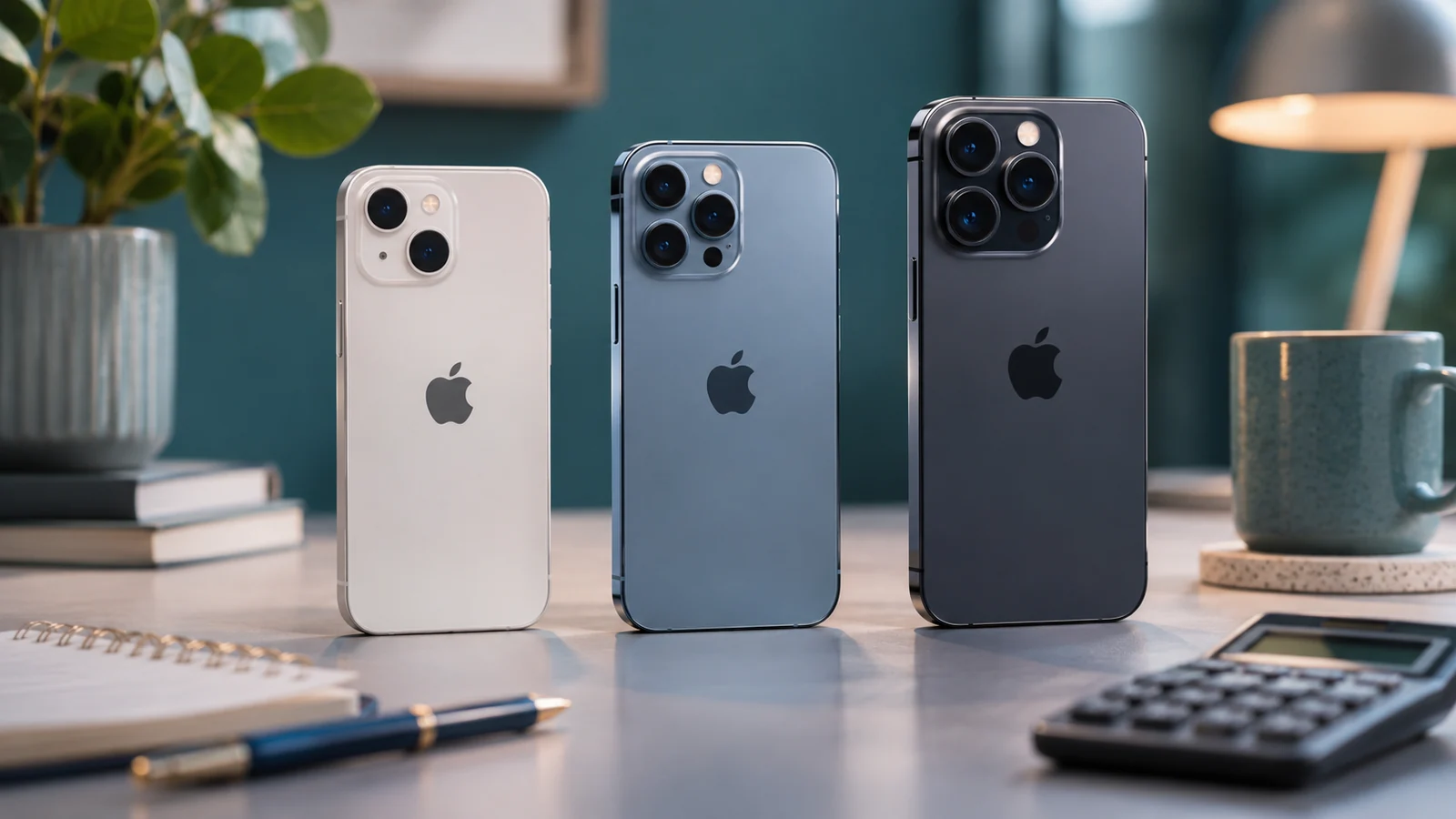
The question “which iPhone should I buy in 2026?” is not answered by selecting the largest model number. Apple Portugal currently lists seven distinct choices when Pro and Pro Max are counted separately: 17e, 16, 17, Air, 18 Pro, 18 Pro Max and Duo. Each serves a different need, from dependable daily use to serious image-making or a foldable workspace.
The table uses starting prices on Apple’s Portugal online store on 12 November 2026. They are official list prices, not market-wide quotations or promises of stock. Storage, retailer offers and payment options can change what you pay. Older Pro generations may still be sold elsewhere, but they do not appear in the current Apple Portugal store list.
| Model | From* | Display | Chip | Cameras | Best fit |
|---|---|---|---|---|---|
| iPhone 17e | €889 | 6.1 in | A19 | 48MP Fusion main camera; no ultrawide | More affordable new choice |
| iPhone 16 | €1,039 | 6.1 in | A18 | 48MP Fusion main + 12MP ultrawide | Consider if discounted |
| iPhone 17 | €1,139 | 6.3 in / 120Hz | A19 | 48MP Fusion main + ultrawide | Balanced everyday choice |
| iPhone Air | €1,349 | 6.5 in / 120Hz | A19 Pro | 48MP Fusion main camera | Thin and light design |
| iPhone 18 Pro | €1,499 | 6.3 in / 120Hz | A20 Pro | Pro Fusion system; dedicated telephoto | Advanced photos and video |
| iPhone 18 Pro Max | €1,649 | 6.9 in / 120Hz | A20 Pro | Pro Fusion system; dedicated telephoto | Large screen and battery life |
| iPhone Duo | €2,399 | 7.6 in inside; 5.4 in outside | A20 Pro | 48MP Dual Fusion system | Foldable multitasking |
*Apple Portugal entry prices checked on 12 November 2026. Higher storage options cost more; offers and stock can change.
One revealing comparison: the iPhone 16 is still listed at €1,039, while the newer 17e starts at €889. An older generation is not automatically the lowest-cost purchase. Evaluate the particular phone and price available to you.
2. Which iPhone fits your budget?
Up to €900: the 17e is the lowest-priced new model sold directly by Apple. It offers an A19 chip, 48MP Fusion main camera and 256GB starting storage. It lacks an ultrawide camera, so it is best considered by buyers whose main activities are calls, maps, communication, banking apps and occasional photos.
€900–€1,200: the iPhone 17 steps up to a 6.3-inch 120Hz ProMotion display and a 48MP Fusion ultrawide camera. Consider the iPhone 16 only if the actual discount is compelling or it meets a particular need that the alternatives do not.
€1,200–€1,500: the Air prioritises a slim, light design; the iPhone 18 Pro, from €1,499, offers more advanced imaging tools. Above €1,500: the Pro Max makes sense for those prioritising screen size and battery endurance; the Duo addresses a different requirement, using a foldable workspace. None is a mandatory upgrade from a well-functioning iPhone 17.
3. iPhone 17e versus iPhone 17: the most useful trade-off
The starting-price difference is €250. The 17e offers a 6.1-inch OLED panel, A19 chip and 48MP main camera. The 17 adds a 6.3-inch display with up to 120Hz ProMotion, an always-on display and a 48MP Fusion ultrawide camera. These changes matter most when you spend a lot of time scrolling, reading or photographing interiors and landscapes.
Choose the 17e if a current iPhone at a lower price meets your requirements. Choose the 17 if display fluidity and camera versatility affect your daily experience. Before paying extra, compare the phones in hand at a shop rather than relying exclusively on specification lists.
For a closer comparison, read iPhone 17 vs 17e comparison. That article examines the pair in detail; this overview helps decide how much those differences matter to your own purchase.
4. iPhone Air: prioritising lightness over extra lenses
According to Apple, the Air weighs 165g and is 5.64mm thin. Its 6.5-inch ProMotion display and A19 Pro chip are designed around an unusually thin device. A light phone may be particularly appealing to people who read, travel or use it for long periods in one hand. However, slimness is a design choice, not a universal measure of capability.
The 48MP Fusion main camera gives less physical lens flexibility than the Pro range. People who frequently photograph wildlife, sport or wide indoor scenes should examine that limitation. In these situations, a more versatile camera system may matter more than the weight saved in a pocket.
If you are undecided between the Air and a Pro model, read iPhone 18 Pro vs Air. The aim is to select the compromises that suit your use, not to declare one design “best” for everyone.
5. iPhone 18 Pro or Pro Max: camera tools, video and endurance
Both iPhone 18 Pro models use the A20 Pro and a Pro Fusion camera system with a variable-aperture 48MP main camera, 48MP Fusion ultrawide and dedicated telephoto lens. Apple documents advanced controls including aperture, shutter speed and white balance. These tools are valuable when you want greater creative control rather than merely automatic capture.
Between Pro and Pro Max, the key differences concern size, weight, endurance and price. The Pro has a 6.3-inch display and weighs 211g; Pro Max rises to 6.9 inches and 249g. Their starting prices are €1,499 and €1,649 respectively, a €150 difference.
Frequent high-end video work makes recording format, storage space and external-drive support relevant. For occasional portraits and clips, the iPhone 17 may be more than sufficient. See iPhone 18 Pro vs 17 Pro and our professional video guide before choosing a storage tier.
6. iPhone Duo: is the foldable screen worth the premium?
The Duo combines a 7.6-inch internal display and 5.4-inch external display. Apple lists an A20 Pro chip and a 48MP Dual Fusion camera system. At €2,399 or more, it is a substantially different purchase from a conventional smartphone.
The foldable format may add real value when reading lengthy documents, checking maps, reviewing two kinds of content or working on a larger screen while mobile. But there are practical trade-offs: weight, thickness when folded, protection, hinge use and comfort in one hand. Try the device before deciding. The Duo is not automatically a better camera phone than Pro Max.
Read iPhone Duo vs 18 Pro Max and iPhone Duo vs iPad mini. A traditional iPhone paired with a tablet may sometimes meet the same requirements more economically.
7. Comparison by buyer profile
Buyer profiles make a complex range easier to navigate, but they are not universal rankings. The recommendations below connect documented features to practical priorities. A buyer can belong to several profiles at once, so consider what you value most.
| Buyer profile | Consider | Why |
|---|---|---|
| Everyday use on a controlled budget | iPhone 17e | Apps, messages, maps and occasional photos |
| Balanced features and travel photography | iPhone 17 | 120Hz display and ultrawide camera |
| Lightweight mobility | iPhone Air | 165g and 5.64mm-thin design |
| Advanced photo and video work | iPhone 18 Pro | Pro controls and flexible camera system |
| Large display and battery endurance | iPhone 18 Pro Max | 6.9-inch display and higher-end Pro endurance |
| Productivity and long-form reading | iPhone Duo | 7.6-inch foldable internal display |
If you have competing priorities, weigh them explicitly. A photographer who also needs one-handed comfort might assign 40% to imaging, 35% to ergonomics and 25% to price. A technical advantage has limited value if the device is uncomfortable in daily use.
8. Displays and cameras: look beyond the megapixel count
Camera quality is not determined by pixel count alone. Consider the actual lenses available, aperture, stabilisation, video features and the type of images you make. The 17e has a 48MP Fusion main camera; the 17 adds a dedicated 48MP ultrawide. The 18 Pro adds a variable-aperture main camera and dedicated telephoto flexibility.
When evaluating displays, examine size, readability outdoors, refresh rate and comfort. The 120Hz panels in the iPhone 17, Air, 18 Pro and Duo affect not just games but everyday scrolling and navigation. The 17e’s 6.1-inch OLED is still well suited to typical use, although it lacks the same premium display features.
See our iPhone photography guide. Try the same backlit subject, portrait, room interior and wide landscape on your finalists before buying.
9. Battery life, size and everyday comfort
Published battery figures are based on controlled tests. Real-world endurance changes with brightness, signal, temperature, navigation, video, gaming and battery condition. Do not treat a single playback-hour figure as a direct promise of your own usage. Apple positions the 18 Pro Max as the top Pro option for endurance, but its dimensions and weight also increase.
Hold a phone for several minutes, type with one hand and check that it fits your usual pocket or bag. The Air offers lightness; Pro Max offers a larger display; Duo changes the handling experience between its open and folded positions. The most striking device in an advertisement may not be the one you enjoy carrying every day.
For battery-saving settings, read our battery-saving guide. Saving charge over a day is not the same task as preserving long-term battery health.
10. Storage, eSIM and the total cost over several years
Storage needs planning beyond day one. Open Settings > General > iPhone Storage, note what you use today, estimate annual growth and allow room for photos, apps, video and documents. Apple’s current 17e, 17, Air, 18 Pro and Duo lists begin at 256GB; the iPhone 16 listing starts at 128GB.
Frequent 4K or Apple ProRes recording increases the importance of storage. But paying for 1TB without a clear need may be unnecessary. Add a case, charging equipment, optional cloud storage and any finance costs to your budget. Confirm eSIM and physical-SIM support for the exact Portuguese version you intend to buy.
Illustrative calculation: €1,499 divided over four years is roughly €375 per year; €1,139 comes to about €285. This is not a complete ownership-cost figure: it excludes accessories, repairs, services, resale value and borrowing costs. It helps frame the scale of spending rather than predicting device lifespan.
11. Buying in Portugal: prices, warranty and refurbished options
Check the final price at Apple and reputable retailers, comparing exactly the same storage configuration. Include delivery, stock, return terms and the total cost of instalments. A large advertised percentage discount means little if it is measured against an outdated reference price or requires extra paid services.
New goods sold by professional traders in Portugal are generally covered by a three-year legal conformity framework. Distance purchases also have specific withdrawal rights and exceptions. Keep your invoice and contract details, and check the applicable rules for refurbished devices rather than assuming that every purchase route is identical.
For lower-cost options, use our refurbished iPhone guide and buying checklist. An earlier iPhone with a sound battery and appropriate legal protection may be better suited to your budget than financing a new flagship.
12. A repeatable five-minute decision method
Step 1 — fix your ceiling: include the phone and genuine extras. Step 2 — pick three candidates: one safely within budget, one near the maximum and one alternative based on your priorities. Step 3 — score five criteria: total price, battery, camera, comfort and storage on a 1–5 scale, using weights that add to 100%.
Example: price 30%, battery 25%, camera 20%, comfort 15% and storage 10%. Multiply each score by its weight and compare totals. A frequent traveller may put more emphasis on endurance; a casual user may give greater importance to purchase cost. This is a personal decision framework, not an official ranking.
Step 4 — remove unnecessary features: do not pay for ProRes, extra telephoto lenses or a foldable screen without a clear use. Step 5 — check current prices and try the finalist: a successful purchase is the iPhone that meets your requirements at a proportionate overall cost, not automatically the most recent model.
Frequently asked questions
What is the cheapest starting price at Apple Portugal in November 2026?
The iPhone 17e starts at €889 on Apple’s Portugal store as checked on 12 November 2026. Other retailers may quote different prices.
Is the iPhone 17 worth €250 more than the 17e?
It can be if you value its 120Hz ProMotion screen and 48MP Fusion ultrawide. The 17e can be sufficient for everyday apps and communication.
Which model makes sense for advanced photography or video?
The iPhone 18 Pro or Pro Max, thanks to the Pro Fusion camera system, dedicated telephoto and advanced controls. Check supported formats and storage requirements.
Does iPhone Air have better cameras than iPhone 17?
That is not a fair general conclusion. The Air prioritises lightness and has a 48MP main camera; the 17 also has a 48MP ultrawide. What you photograph matters.
Can iPhone Duo replace an iPad?
It depends on the workflow. The foldable screen is useful for reading and multitasking but is not necessarily equivalent to a separate iPad.
Should I buy now or wait for a sale?
If your current phone meets your needs, monitor verified prices and conditions. Future discounts are uncertain, so do not delay an essential replacement solely in expectation of a sale.
Apple Portugal — iPhone lineup and starting prices
Apple Portugal — model comparison
iPhone 17e — technical specifications
iPhone 17 — technical specifications
iPhone 16 — technical specifications
iPhone Air — technical specifications
iPhone 18 Pro and Pro Max — technical specifications
iPhone Duo — technical specifications
iPhone 18 Pro — buying configurations
What matters most
Start with the 17e for controlled spending and the 17 for a balanced phone and a more fluid screen. The Air prioritises low weight; 18 Pro serves more demanding creative work; Pro Max adds screen space and endurance; and the Duo introduces a different mobile workspace. Match the actual features to your needs and the total cost.