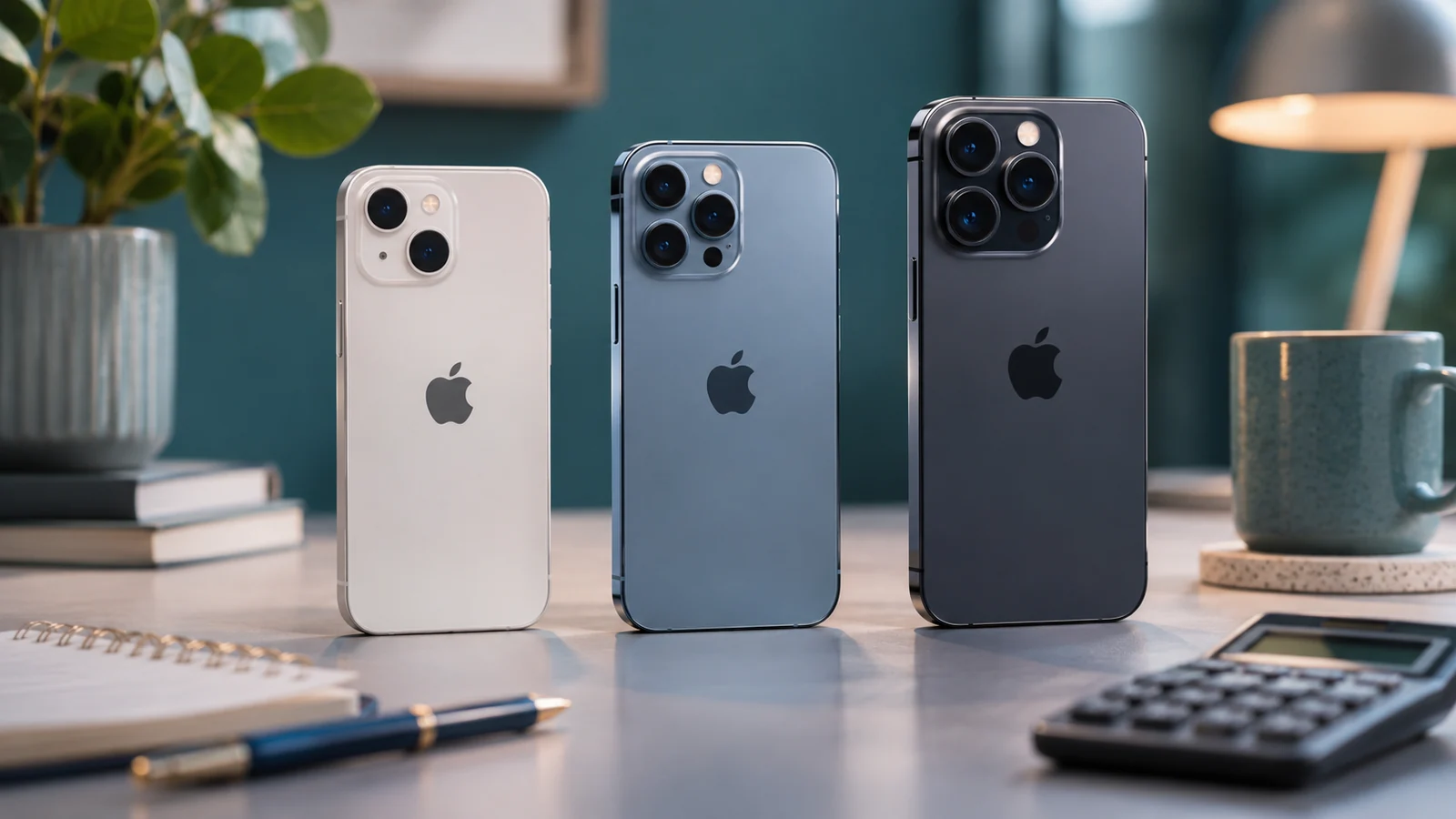
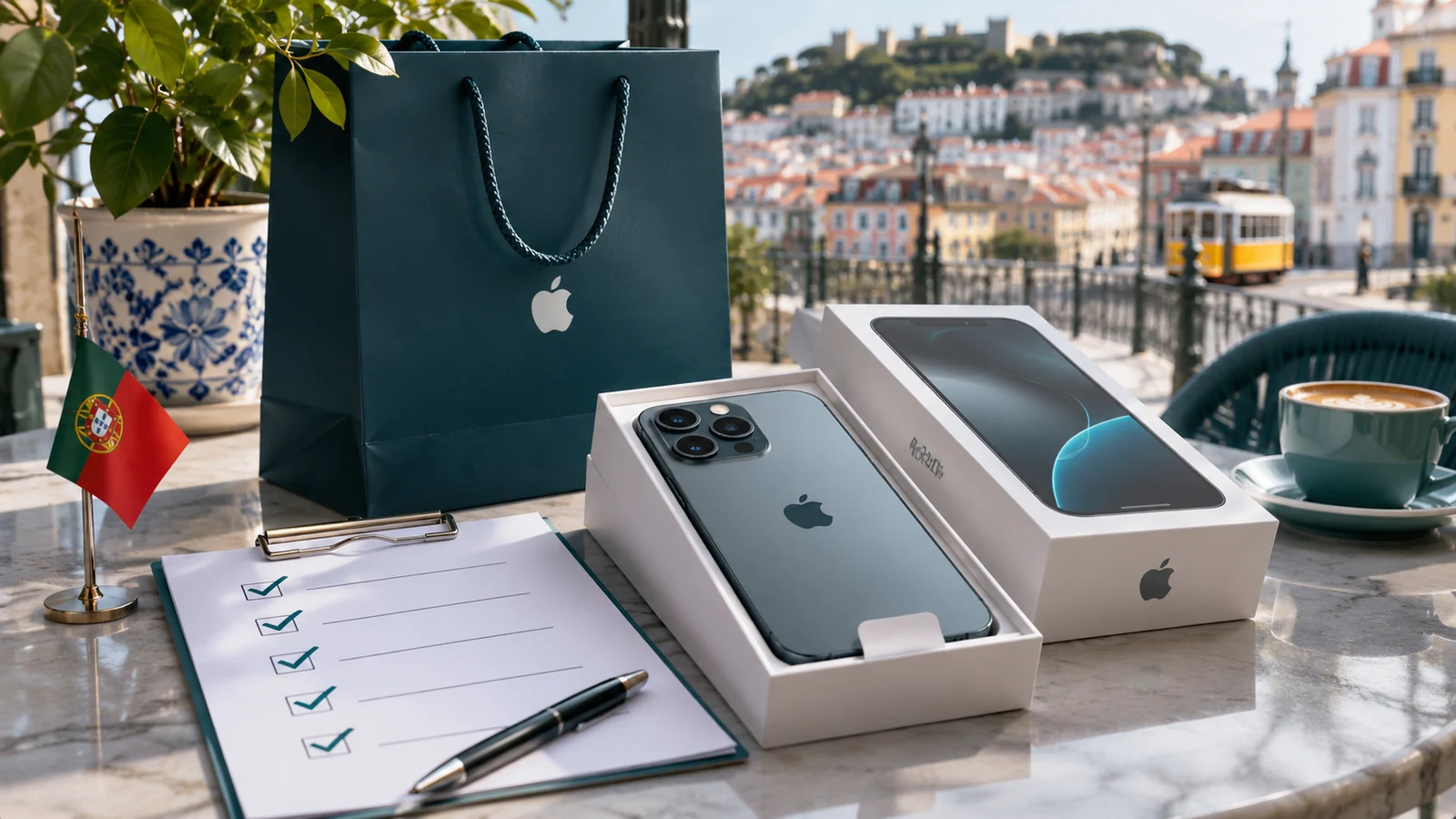
A refurbished iPhone can offer access to a higher-end model for less money, but the label “refurbished” alone does not guarantee value. What matters is the inspection process, replacement parts, battery health, legal protection and seller identity. This guide sets out the checks worth making before payment and when the device arrives in Portugal.
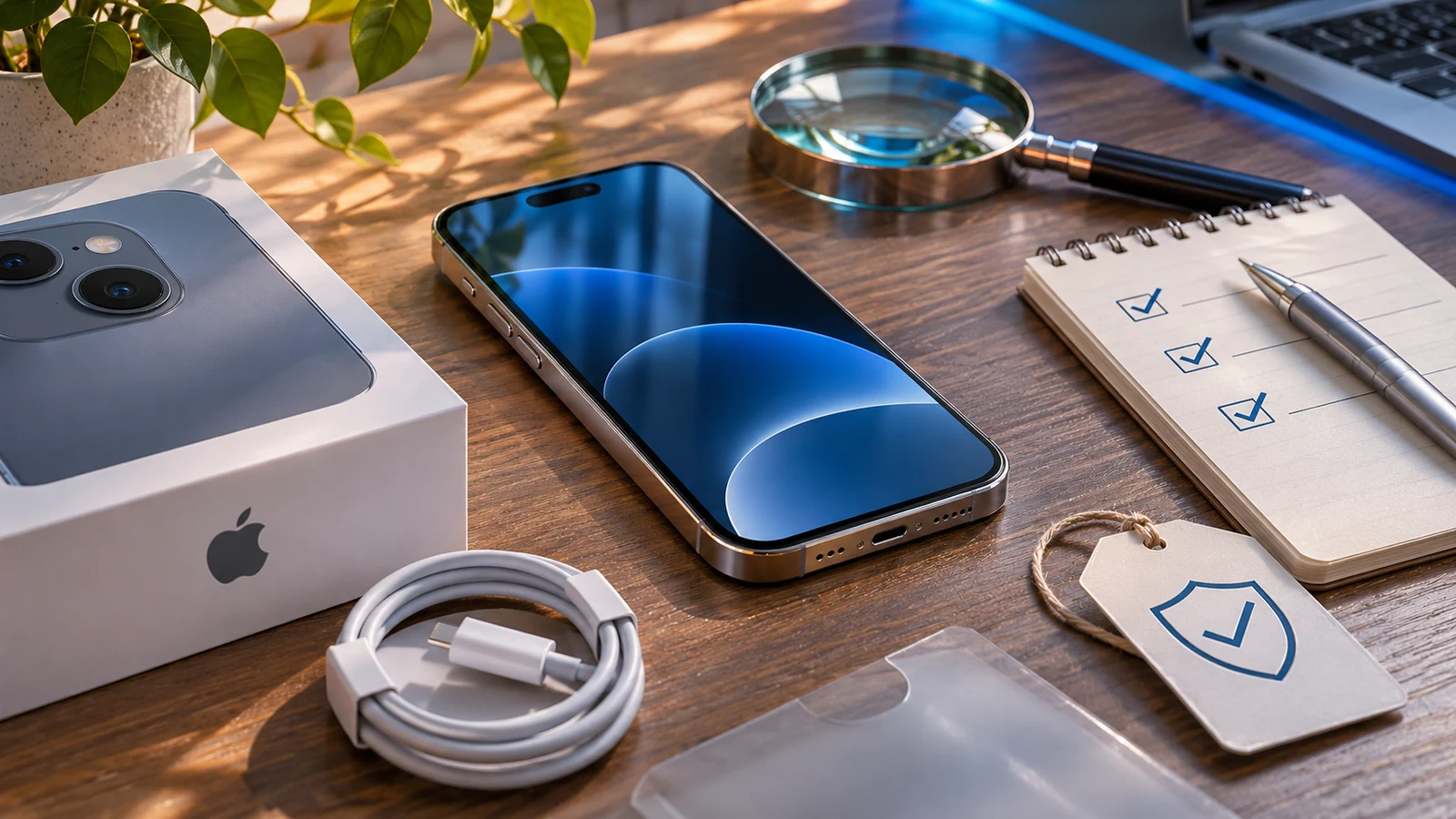
Editorial note. Informational content based on official sources and purchase criteria. Verify prices and terms before ordering.
Understand the difference between used and refurbished
A used iPhone may be sold in its existing condition with varying degrees of wear. A refurbished unit should have been assessed and prepared for resale, but the depth of that process varies. Some phones are merely cleaned and tested, while others receive new batteries, screens or other parts. Labels such as “like new”, “excellent” and “grade A” are commercial categories rather than a universally comparable standard.
Ask for a written account of testing, replacements, provenance and acceptable cosmetic defects. The condition advertised must match the unit delivered. Do not confuse a stock product photograph with the appearance of the specific device, especially on marketplaces where different sellers share a listing.
Identify the seller and the party responsible
Check the legal trading name, contact details, address, invoice and after-sales channels. Reviews help, but they cannot replace clear obligations. On marketplaces, establish whether the seller is a business or an individual, and do not assume the platform itself is always the seller.
Look for written information about returns, faulty products, transport costs and the destination for repairs. If a merchant says every device is certified, ask who performed the checks and what they cover. Vague answers about “full testing” are a reason to delay the purchase.
Know the applicable legal warranty in Portugal
Purchases from a professional seller generally carry a three-year statutory conformity period under Portuguese law. For ordinary second-hand goods the period may be reduced to eighteen months by agreement. However, goods advertised as refurbished and identified as such on the invoice retain the three-year period under Decree-Law 84/2021.
Request an invoice that identifies the phone and its status. A blanket claim that the product has “only six months of warranty” should not be accepted as a replacement for statutory rights. Commercial warranties are separate. Private sales do not automatically provide the same consumer-business legal protections.
Assess battery health realistically
Maximum battery capacity is a useful indicator of wear, not a complete prediction of everyday runtime. Ask for the minimum battery health promised, cycle information when available, and whether the battery is original, replaced or of unknown origin. A listing promising “100% battery” should explain whether a replacement took place and how it was verified.
An 80% capacity reading is not automatically a quality seal. It may be too low for heavy users. Consider the cost of a future replacement and test charging and unusual heating as soon as the phone arrives. Warnings about unknown components deserve investigation before you accept the unit.
Check Activation Lock and remote management
Apple warns against buying a phone that is still protected by a previous owner’s Activation Lock. The device should no longer be associated with their account and must complete setup without requesting someone else’s credentials. A screen stating “iPhone Locked to Owner” is a reason not to complete the purchase.
Also check for business or school management restrictions that may appear during setup. A device previously assigned to an organisation can look normal at first and then impose policies. If activation cannot be completed independently, stop and ask the seller to resolve the issue before accepting the phone.
Read the parts and service history
On supported iPhone models and iOS versions, open Settings, General and About to see Parts and Service History. Apple may identify genuine, used, unknown or unfinished repair components. The information varies by model, and not seeing an entry does not prove that nothing was ever repaired.
Your aim is to understand what was replaced and whether it affects features, safety or future resale value. A documented repair is not necessarily a problem, but an unknown part merits extra questions. Compare system warnings against the seller’s testing report and product description.
Test the screen, buttons, cameras and network
Check touch response, brightness, dead zones, colour consistency and proximity sensor behaviour. Test physical buttons, Face ID or Touch ID, microphones, speakers, haptics, Wi-Fi and Bluetooth. Take photos using every available lens and record a short video with sound.
Inspect the charging port and confirm mobile connectivity. Check whether the phone is carrier-unlocked if that matters for your SIM or eSIM. A short test with your network is useful. A structured list reduces the chance of overlooking small faults that become irritating after daily use.
Compare cosmetic condition and accessories
Remove any case and inspect edges, corners, rear glass, lenses and frame. Light scratches can be acceptable when disclosed and reflected in the price; dents, warping or signs of moisture deserve caution. Check that supplied accessories are compatible and safe.
Do not assume the original water-resistance rating is preserved after years of use and possible repairs. Photograph the device and packaging when it arrives. Those records make it easier to demonstrate differences between the advertised condition and what you actually received.
Calculate the real saving over a new phone
The discount should compensate for age, wear, remaining battery life, storage and maintenance risk. Compare the refurbished offer with a new previous-generation phone, adding the potential cost of battery replacement. A small price gap may make a new device the financially sensible option.
Think over a realistic ownership horizon, perhaps two to four years depending on your habits. Consider software compatibility, spare parts, support and resale value without inventing an Apple update cut-off that has not been announced. The best refurbished deal is not always the cheapest one.
Use return rights and keep written evidence
Distance purchases from professional sellers generally carry a fourteen-day withdrawal right, subject to statutory exceptions. Read the procedure before buying, including communication rules and return shipping costs. Do not assume that an in-store purchase always includes a change-of-mind return right.
Save the invoice, listing, condition description, messages, serial number and delivery proof. Inspect the iPhone promptly and report any mismatch in writing. Testing it on the first day gives you more time to deal with a problem than discovering a fault weeks later.
Frequently asked questions
Does a refurbished iPhone carry a three-year warranty?
In Portugal, when sold by a professional as refurbished and identified as such on the invoice, the statutory conformity period is generally three years.
Is 80% battery health acceptable?
It depends on price and usage. Heavy users may need to budget for a replacement.
Can I buy a phone locked to its former owner?
No. Only complete the purchase once Activation Lock has been removed and the phone can be set up.
How to inspect a used iPhone — Apple
Parts and Service History — Apple
What matters most
A good refurbished iPhone is defined by verifiable transparency. A real seller, a correct invoice, legal protection, battery health and freedom from activation restrictions matter far more than an appealing grade label. A saving is only real when the phone performs as expected.