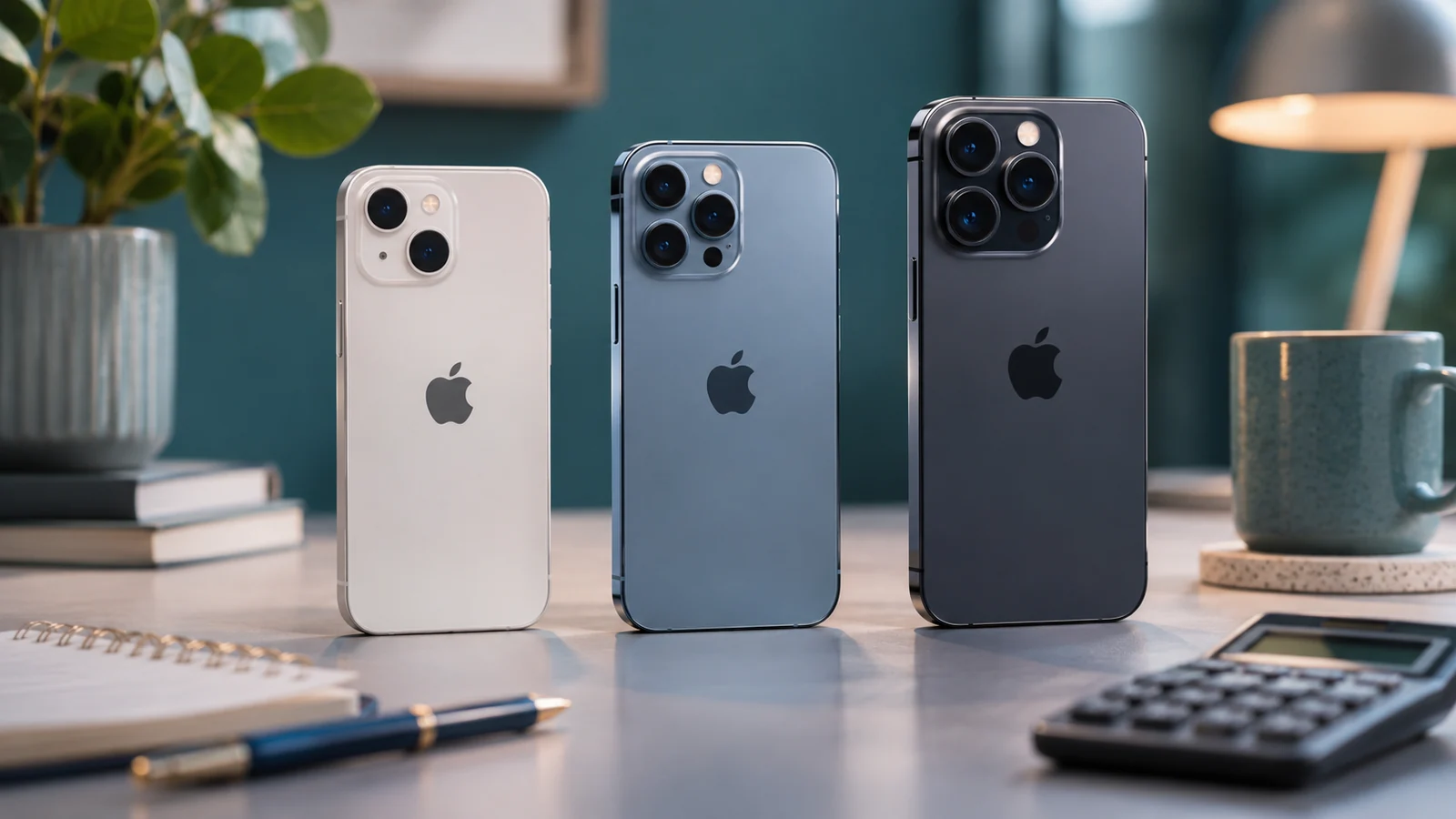
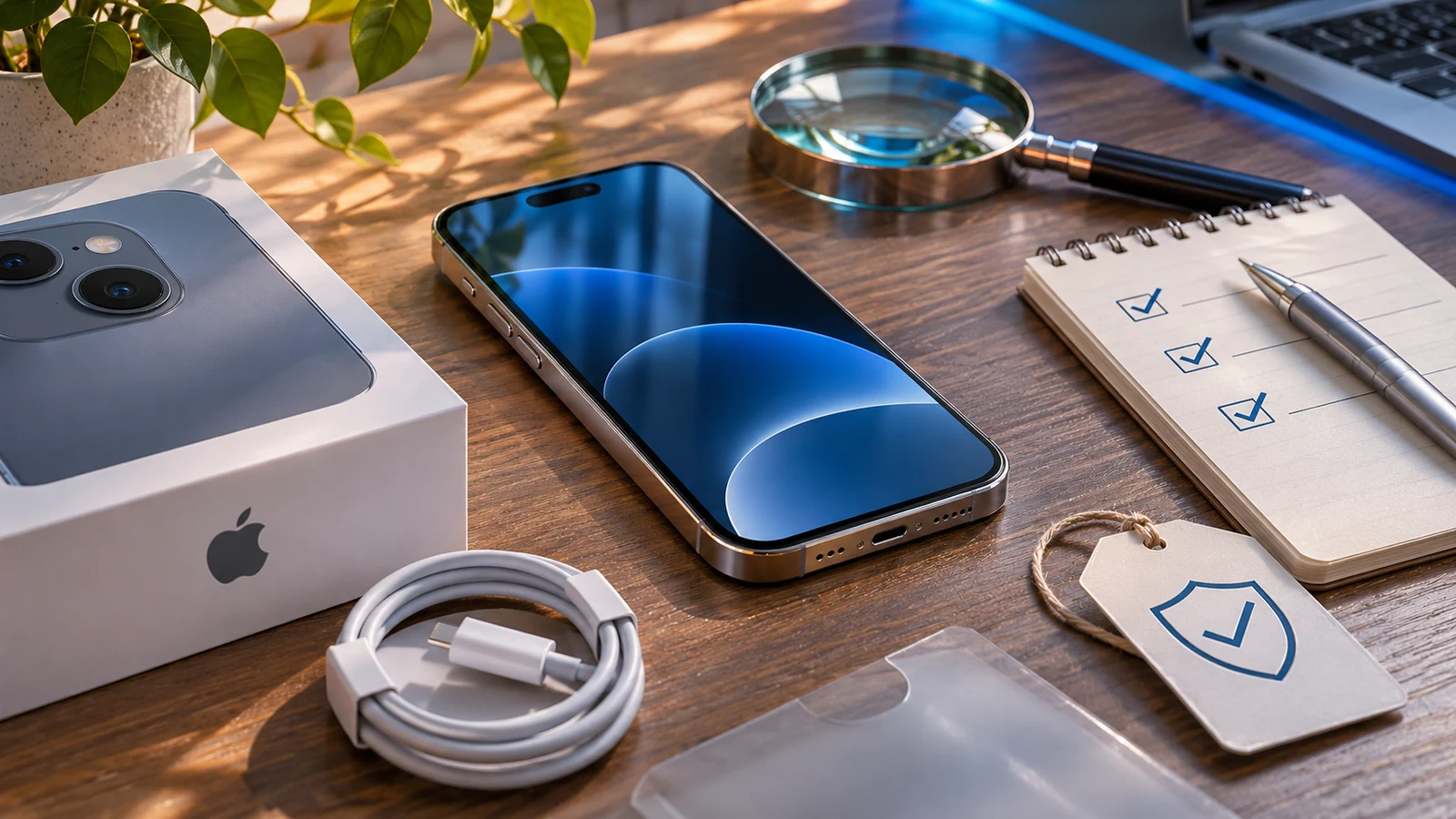
Buying an iPhone in Portugal seems straightforward: choose a model, pay and receive the package. Yet problems often begin with details that are easy to miss—wrong storage capacity, imported variants, incomplete invoices, unclear sellers or difficult returns. This checklist organises the purchase into three stages: before paying, during the order and after delivery.
Editorial note. Informational content based on official sources and purchase criteria. Verify prices and terms before ordering.
1. Verify the exact model and capacity
Check the full model name, generation, storage capacity, colour and advertised variant. Product listings sometimes show illustrative photos of a configuration different from the one actually sold. Do not compare prices for different capacities as if they were equivalent. Keep a record of the product page on the day you place your order.
Also check what comes in the box and whether a charger or accessories must be purchased separately. The right configuration is the one that meets your priorities, not simply the first promoted result. Your order summary should be specific enough to verify against the contents when the parcel arrives.
2. Check total price and financing terms
Review the final cost including VAT, shipping, fees and any financing charges. A small monthly payment is not by itself proof of value. For instalments, check the duration, interest, fees, total repayable and consequences of missed payments. Make sure the amount fits your budget even when unexpected costs arise.
When an offer includes accessories, services or trade-in credit, assess each component separately. A free extra only saves money if you would otherwise have bought it. Save the checkout summary and verify that the price has not changed between the offer and the completed transaction.
3. Identify the actual seller
On ecommerce websites and marketplaces, the platform name is not always the business selling the phone. Check the seller’s trading name, business identification, contact details, country of dispatch and responsibility for warranty. Two offers on the same platform may have very different terms.
Read recent reviews, but focus on verifiable details: who invoices you, who handles returns and where after-sales support is located. Be wary of requests to pay outside the platform, transfers to unfamiliar recipients or links received in unsolicited messages. The ability to resolve a problem is part of the product value.
4. Confirm compatibility with Portugal
If the phone was imported, confirm the precise variant, its compatibility with Portuguese mobile networks and its SIM or eSIM setup. International models can differ in physical SIM support. Having eSIM capability does not mean that activation or transfer works identically across every carrier and tariff.
Check carrier lock status and whether you can use your current number. If you need two numbers, confirm supported dual-line configurations. For purchases involving countries outside the European Union, look carefully at import costs and the practical location where consumer rights can be enforced.
5. Request a proper invoice and keep records
Verify that the invoice identifies the seller, the device and the amount paid. If you want your Portuguese taxpayer identification number included, provide it at the appropriate stage and confirm it appears correctly. It may help with recordkeeping and tax documentation, but the absence of a NIF alone does not automatically remove all consumer rights.
Save the order confirmation, payment receipt, contract terms, seller messages and serial number when available. Store them somewhere accessible rather than only in an email that might be deleted. An expensive purchase should leave a clear documentary trail.
6. Understand the three-year legal guarantee
In Portugal, professional-to-consumer sales of new goods generally carry a three-year statutory conformity period after delivery. This differs from an additional commercial warranty offered by a retailer or manufacturer. A seller cannot arbitrarily remove legal protection through marketing copy or a short FAQ.
For used or refurbished devices, check the specific rules. Ordinary second-hand goods may have an agreed reduction to eighteen months, while goods advertised as refurbished and identified as such on the invoice generally keep the three-year period. Review the applicable legislation and the written terms before paying.
7. Know the difference between online and in-store returns
For distance purchases from a professional seller, consumers generally have fourteen days to withdraw without giving a reason, subject to statutory exceptions and conditions. Check how to notify the seller, when the period starts and who bears direct return shipping costs when applicable. This is distinct from remedies for faulty goods.
For an in-store purchase, there is no general equivalent right to return a fault-free product simply because you changed your mind. Shops may offer more generous voluntary policies, so read them before paying. Also check the procedure for packaging, accessories and refunds.
8. Choose traceable payment and delivery methods
Use payment methods that create a clear record and provide dispute channels where available. Avoid shortcuts outside the official checkout. Confirm the shipping address, contact details, carrier, expected delivery date and tracking number. If the item is advertised as available, check whether the seller holds stock or relies on a separate supplier.
When the parcel arrives, inspect the packaging and photograph visible damage. Report signs of tampering promptly through the available channels. An undamaged outer box does not prove the device inside is the correct configuration: that needs to be checked after opening.
9. Inspect and test the phone after delivery
Photograph the box, compare model and capacity with the order, and keep labels and documents. Switch on the iPhone and complete setup with your own Apple account. Check the screen, buttons, sound, cameras, charging, Wi-Fi and mobile connection. Keep your previous phone available until your important data has migrated successfully.
Watch for unexpected activation messages or warnings in Settings. A new phone should not require a previous owner’s account. If the product does not match the description or fails to work, contact the seller in writing before attempting changes that may complicate investigation.
10. Check future security and running costs
Once the purchase is complete, enable strong Apple account authentication, configure Find My, review permissions and update iOS. Avoid entering sensitive financial details into suspicious setup pages. Keep recovery information safe and confirm access to your account before erasing the old phone.
Also review recurring subscriptions, optional insurance and storage usage. A good purchase continues after payment: you should be able to use the device safely and predictably, without services or expenses you had not anticipated. This final step makes the whole buying process more controlled.
Frequently asked questions
Does a new iPhone have a three-year legal warranty in Portugal?
In professional-to-consumer sales of new goods, the legal conformity period is generally three years after delivery.
Can I return an online order after opening it?
Distance purchases generally offer a fourteen-day withdrawal right, but specific rules and exceptions apply. Handle the goods only as needed to inspect them.
Must the invoice include my Portuguese NIF?
Always request an invoice; provide your NIF if you want it included. Legal consumer rights are not based solely on that field.
Portuguese legal guarantee — Decree-Law 84/2021
What matters most
Before buying, verify the model, seller, final price, invoice and your rights. After delivery, test the device and keep the records. A consistent checklist prevents small oversights from turning into expensive problems.