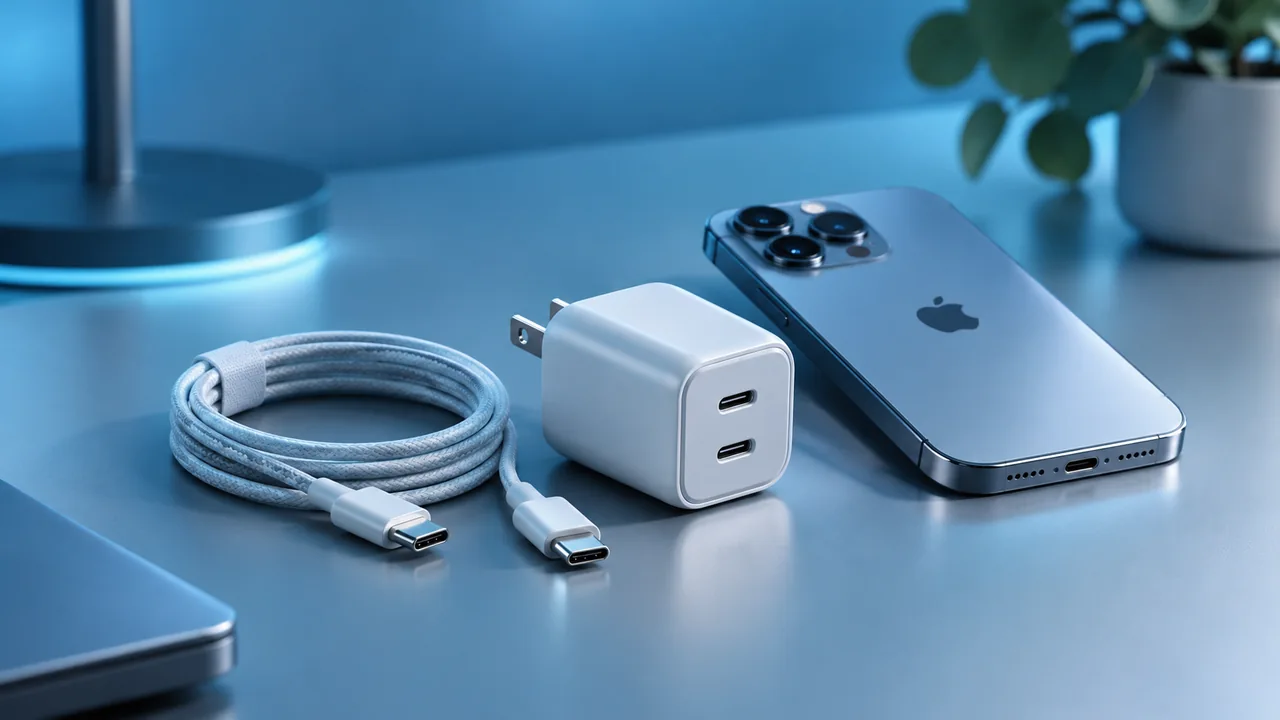
A magnetic power bank adds battery life without leaving a cable hanging between your pocket and your iPhone. The convenience is obvious, but the quality of the experience depends on compatibility, real usable capacity, alignment, thickness and temperature management. Comparing 5,000mAh with 10,000mAh alone is not enough to estimate extra charges.
Editorial note. Independent editorial content using public specifications and buying criteria; not an independent laboratory test.
What makes a power bank magnetic
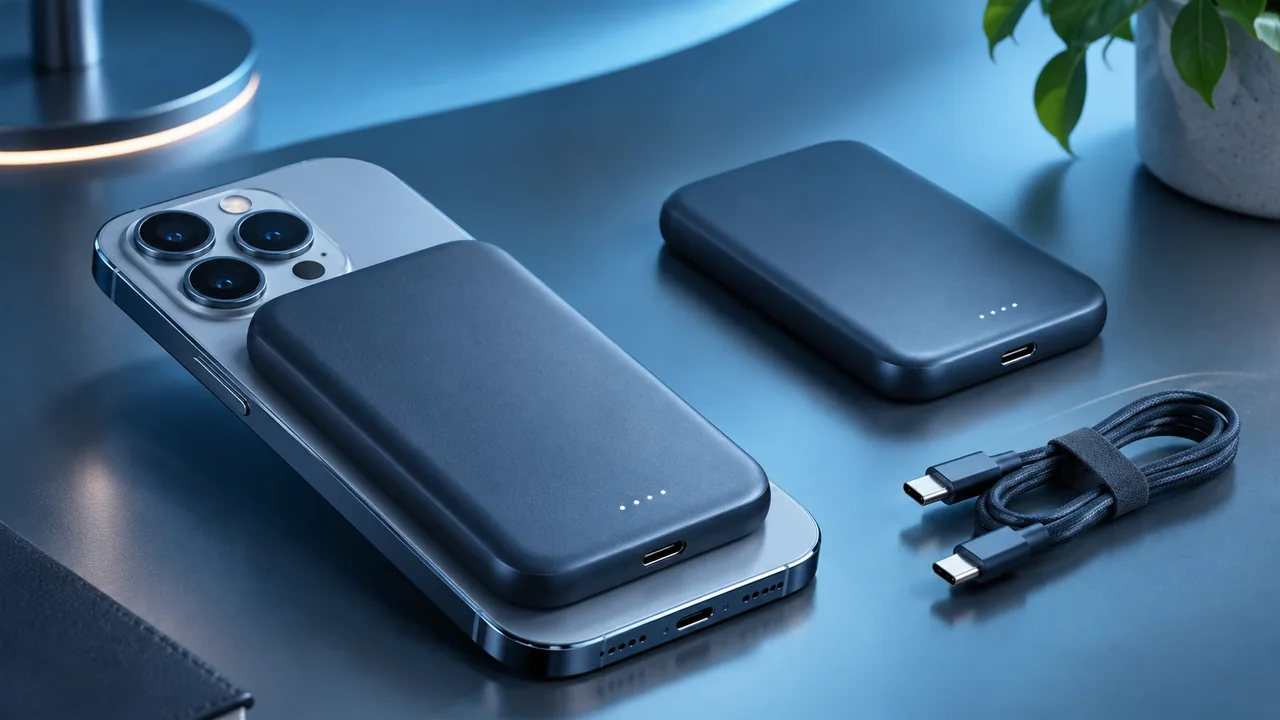
A magnetic power bank attaches to the back of a compatible iPhone through magnets aligned with the wireless charging system. The main attraction is a compact all-in-one package that lets you continue using the phone while moving. But magnetic attachment and energy transfer are separate functions: the magnets position the battery, while the charging technology determines output. A product can hold securely yet charge more slowly than expected. Check the underlying wireless charging protocol and supported output.
5,000mAh versus 10,000mAh
The mAh figure describes the nominal capacity of the internal cells at a particular voltage, not the energy that reaches the phone in full. Conversion losses, heat and simultaneous use reduce usable output. A 10,000mAh model does not automatically supply two full iPhone charges. Battery size, device model and efficiency all affect the result. For a better comparison, check watt-hours (Wh) and any published usable output data. Larger batteries generally offer more potential runtime but increase weight and thickness.
Qi2, MagSafe and magnetic alignment
It is important to distinguish magnetic compatibility from technical certification. Qi2 introduced a magnetic alignment profile and later developed higher-power versions, including Qi2 25W for certified devices. Not every product featuring a magnet logo supports Qi2, and not every Qi2 product offers the same maximum output. Check the actual certification, phone compatibility and power requirements. A verifiable certification is more useful than a vague marketing phrase.
Wireless charging versus USB-C
Magnetic wireless charging is convenient but can be less efficient than a cable. Inductive energy transfer has losses and depends on alignment and temperature. For short trips, the freedom from a cable may outweigh that compromise. On longer journeys, when predictable and rapid energy transfer matters more, the USB-C output may be preferable if the power bank supports the necessary protocol. A hybrid model can offer flexibility, but check whether cable and wireless outputs can operate together.
Weight, dimensions and ergonomics
A power bank that looks small in a photograph can change the feel of an iPhone significantly. Added thickness, magnetic position and total weight influence one-handed use and pocket comfort. On larger phones, the combined package can feel heavy during calls or photography. Check actual dimensions in millimetres and grams, and think about how the accessory works with your usual case. Oversized corners, awkward ports and slippery surfaces may spoil the experience.
Cases and accessory compatibility
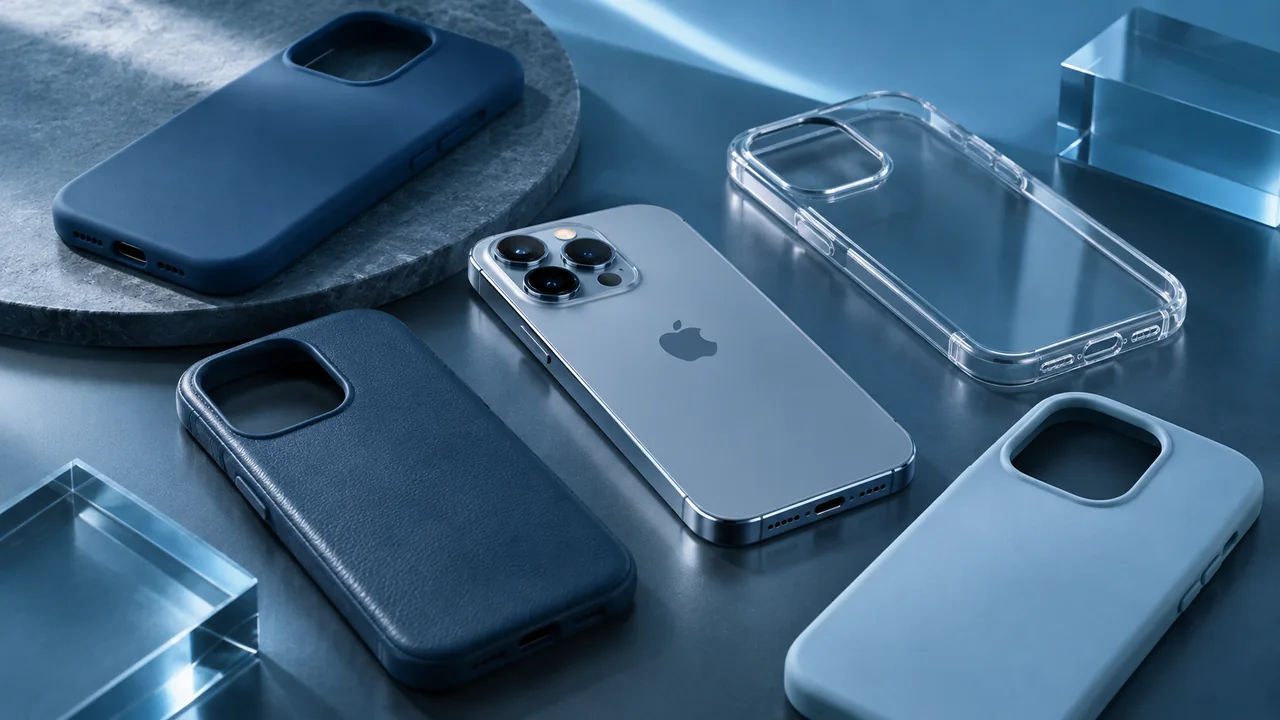
Cases designed for MagSafe or Qi2 can support magnetic alignment. Very thick cases, metal stands, wallets or other objects between the phone and battery may interfere with charging. Do not place sensitive cards or objects between charging surfaces. If your case includes a magnetic ring, make sure it is aligned correctly for your phone. The phrase “MagSafe compatible” should be treated as a starting point, not a guarantee of universal charging speed or holding strength.
Heat and battery care
Wireless charging converts some energy into heat. A compact power bank pressed against the phone may become warmer during demanding tasks or in sunlight. The iPhone can reduce charging speed to protect its battery when temperatures rise. Avoid leaving the package in a hot car or direct sun. If the accessory becomes unusually hot, disconnect it and let it cool. Safety and longevity matter more than chasing peak advertised wattage.
Input power, output power and pass-through
Check the USB-C input used to recharge the power bank itself. Some models support faster recharging while others take several hours. Make sure advertised wattage refers to the appropriate mode: input, wired output or wireless output. Pass-through charging, which powers the bank and the phone together, should be explicitly supported. Consider battery indicators, protective circuitry and cable requirements. Recharging speed matters if you carry the bank every day and have little downtime.
A realistic buying checklist
Define your main use first: emergency backup, daily extra runtime or long journeys. A lightweight model can be ideal for occasional needs. Extended travel may justify higher capacity, a reliable USB-C output and strong attachment. Check certification, warranty, dimensions, watt-hours, wireless output and wired output. Review airline lithium-battery restrictions where relevant. A magnetic battery is most useful when it solves a real problem without making the iPhone excessively heavy or warm.
Frequently asked questions
Does 10,000mAh mean two complete charges?
Not necessarily: conversion and wireless transfer losses affect usable energy.
Is magnetic charging as fast as USB-C?
Not always. Output, protocols and temperature all matter.
Can I use it with a case?
Yes, provided the case and battery support proper magnetic alignment.
Compatibility and output may vary by accessory and iPhone model.
Apple — MagSafe chargers and battery packs ↗ WPC — Qi wireless charging standard ↗Key takeaway
Start with compatibility for your exact model, followed by safety and real-world usability, and only then price. Headline power, protection or capacity numbers are not a substitute for checking real conditions.
For cases, chargers and screen protectors in one place, see our 2026 iPhone accessory buying guide.