Why do iPhone Duo buyers wait almost three months? October 2026 delivery trackers show substantial backlogs, while Apple itself acknowledged supply constraints. The numbers need context: shipment targets are not completed sales, and waits reflect both consumer demand and the challenge of manufacturing a new foldable at scale.
Editorial note. The figures are dated 11 November 2026. Analysts’ estimates and supplier targets are not Apple-confirmed sales figures.
Pre-orders changed the delivery calendar
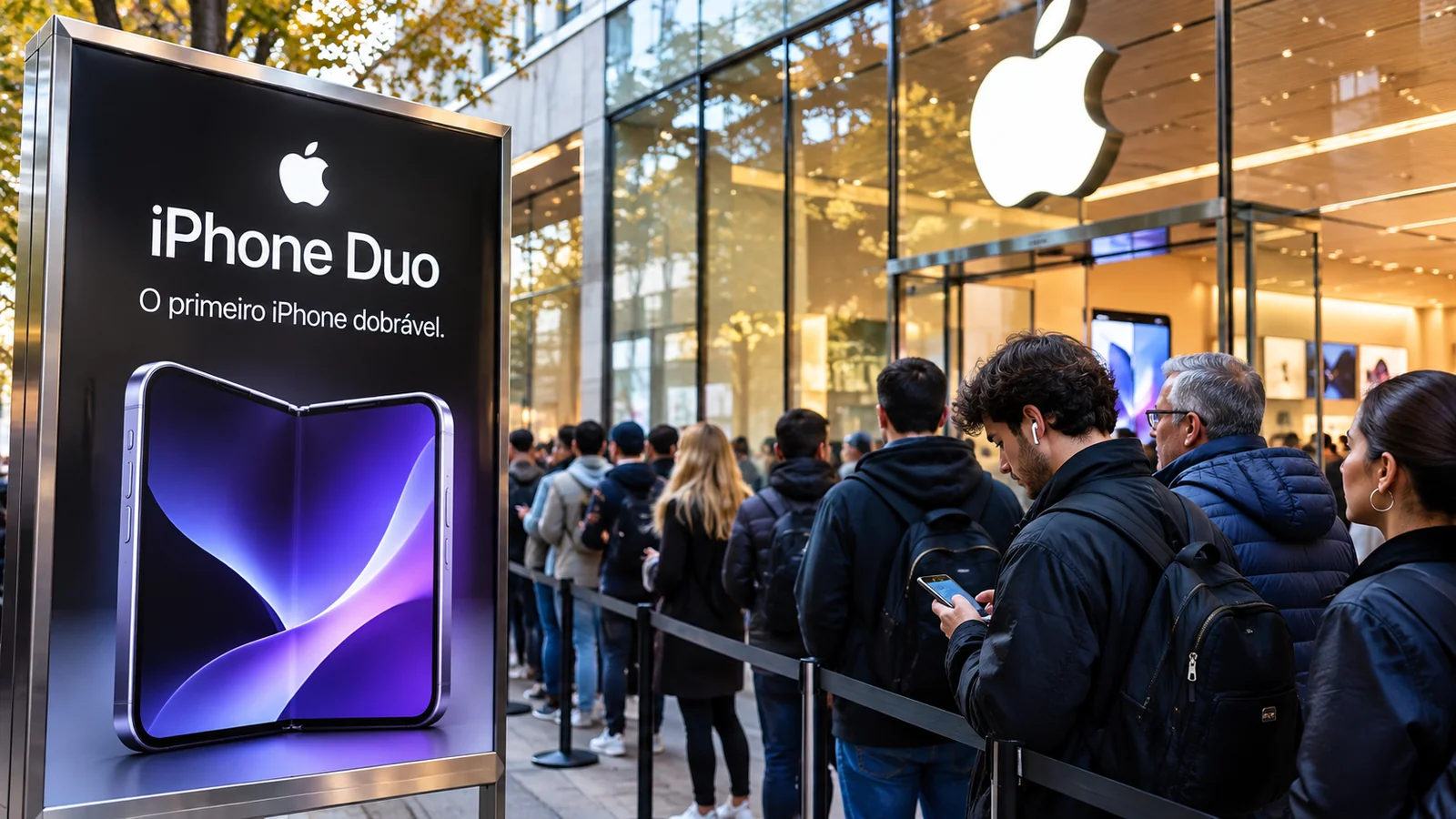
Apple opened iPhone Duo pre-orders on 16 October 2026, with initial availability scheduled for 23 October. The book-style foldable introduced a larger workspace without requiring customers to carry a conventional tablet. Within minutes of orders opening, reported Apple Store delivery windows moved from October towards early 2027. That rapid change prompted a deceptively simple question: why are people willing to wait months for a phone that is already positioned at the top of the market?
To answer it, we need to separate four variables: actual orders, manufacturing capacity, retail inventory allocation and customer motivations. A long delivery estimate is created by the relationship between orders entering the system and finished devices leaving it. Neither the popularity narrative nor the production narrative explains the situation on its own.
What does an 89-day wait actually measure?
As of 30 October, UBS Evidence Lab estimated an average iPhone Duo lead time of 89 days across the markets it tracked, according to MacRumors reporting on 3 November. Its availability monitor covered more than 30 markets. An average lead time is not an actual delivery record for every buyer, nor a promise that new orders will take precisely 89 days.
Another survey, attributed to Bank of America on 19 October, found a weighted global average of 82 days, while some US carrier channels displayed shorter windows than Apple’s online store. Delivery estimates can change by country, storage capacity, colour, retailer and date. Three months therefore describes a documented period of the launch, not a fixed global policy.
Eight to ten million units: forecasts, not confirmed sales
Before launch, supply-chain estimates for the 2026 calendar year ranged from roughly six to ten million units. Reporting on a JPMorgan note described revisions from ten million to eight or nine million, reflecting manufacturing ramp-up concerns. Those figures were forecasts from analysts and supply-chain contacts, not completed sales figures published by Apple.
On 22 October, DigiTimes was reported to have raised a different metric: Apple’s supply target for the first twelve months might have increased from 9.7 million to 14 million devices. This is not directly comparable with a calendar-2026 forecast, since the twelve-month horizon extends into autumn 2027. More importantly, supplier orders, manufactured phones, retail shipments and end-customer purchases are different quantities.
Apple does not provide routine model-by-model iPhone unit sales. Without an official disclosure, it is reasonable to describe intense early interest and upward pressure on supply plans, but not to assert that the company has already sold ten or fourteen million Duos.
Why making a foldable is harder than making a conventional iPhone
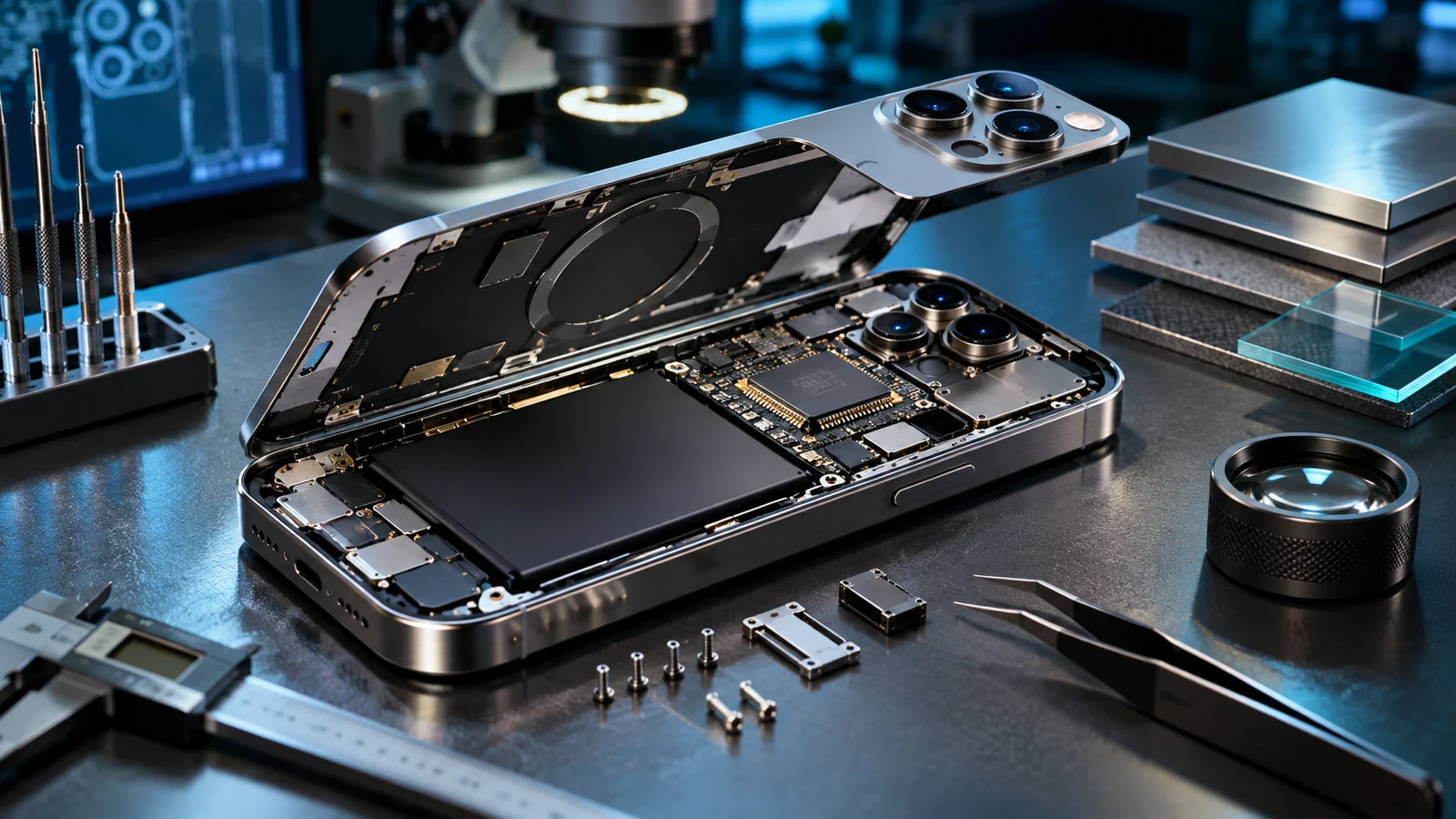
A foldable phone adds production steps that are difficult to scale. A flexible display must survive repeated movement, the hinge must stay precise, and the assembly tolerances affect both comfort and durability. Any one of these elements can slow the entire line even when other components are available.
September supply-chain reports referred to limited assembly yields, display-panel constraints and hinge-related adjustments. Apple has not independently confirmed all of those specific numbers, so the reports should be labelled as industry reporting rather than official defect rates. The underlying manufacturing challenge is nonetheless understandable: a thousand units assembled do not necessarily mean a thousand units approved for sale.
Improving the number of usable devices per production batch may require changing tools, suppliers, assembly settings and testing routines. Pushing output too quickly can create more waste. The goal is to increase reliable capacity, not simply throughput.
Strong demand and limited supply can happen together
A backlog grows when customers place orders faster than manufacturers and distributors fulfil them. This can reflect exceptional consumer appetite, an unusually small initial inventory or a combination of both. In early November, Apple executives acknowledged that the Duo remained supply constrained and said they could not yet predict when supply would meet demand.
That admission matters, but it does not reveal the number of net orders, cancellations, units made or devices sitting in each retail channel. Equally, falling lead times would not necessarily mean that interest has declined: the factory could simply be producing more. A longer queue is a signal of a mismatch, not a complete sales report.
The appeal of a device that changes shape
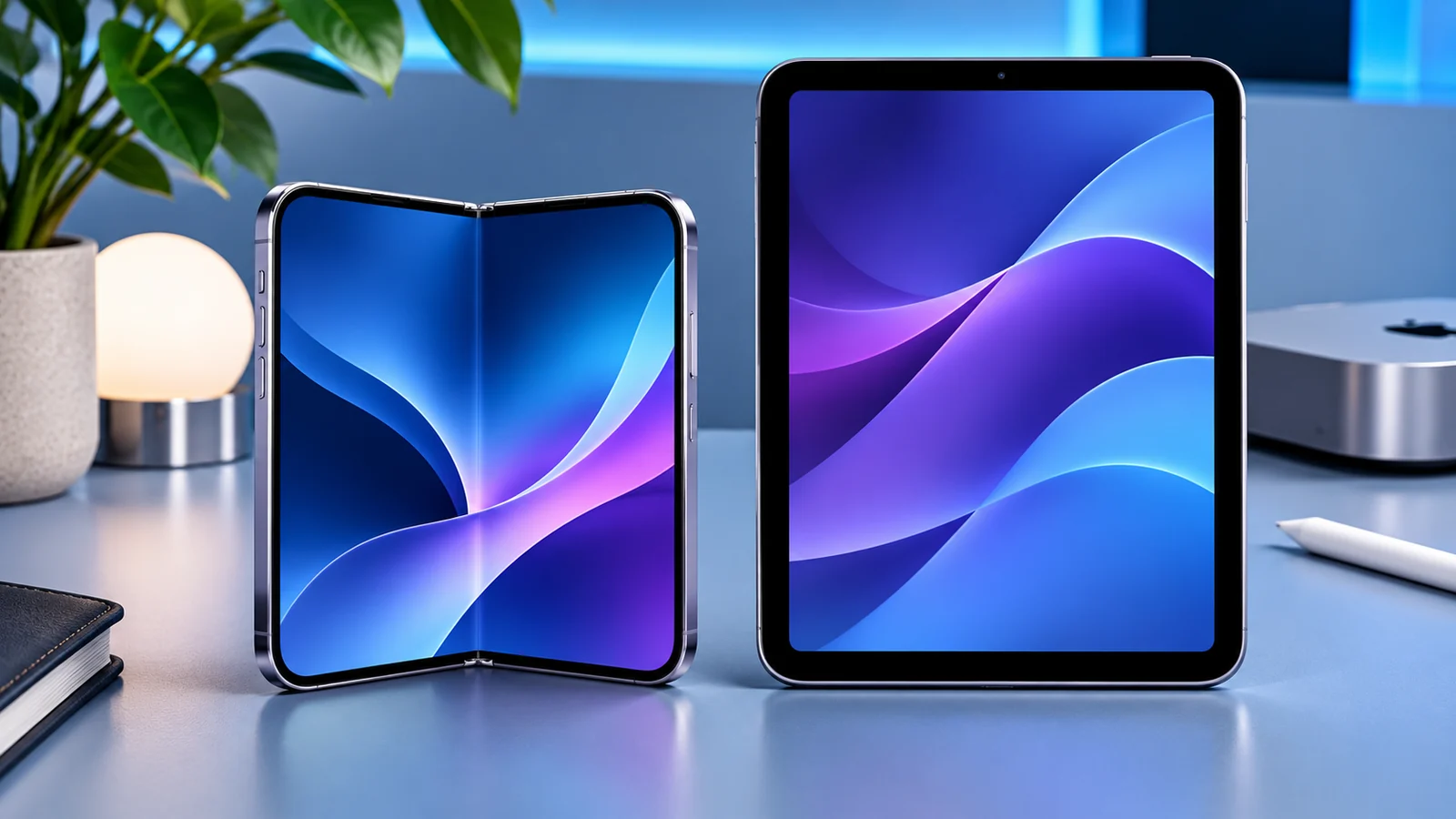
The Duo’s most tangible proposition is a 7.6-inch internal display paired with a 5.4-inch external screen. Closed, the device serves as a pocketable smartphone. Open, it offers more room for reading, video, navigation and compatible multitasking. For users who frequently carry both a phone and a small tablet, that combination can deliver genuine convenience.
The idea also brings compromises. App optimisation, ergonomics, different operating systems and the quality of the large-screen experience still matter. Our iPhone Duo versus iPad mini comparison explores exactly where a foldable phone can and cannot replace a small tablet. The point is not that new hardware automatically improves productivity, but that it may solve a particular set of needs.
High price, anticipation and the psychology of scarcity
In Portugal, the iPhone Duo starts at €2,399 through Apple, with higher prices for larger storage configurations. Buyers may value the novel design, Apple ecosystem integration or the opportunity to combine two use cases in one device. Others will find the price far beyond what their routines or budget justify.
Waiting can amplify anticipation, perceived exclusivity and the fear of missing out. These are possible behavioural mechanisms, not proof that every purchaser seeks status. Many have practical motives: replacing an old phone, wanting a bigger reading surface or staying within a familiar app ecosystem.
Scarcity is not a substitute for quality. A hard-to-find device can have technical weaknesses; an immediately available alternative can offer better value. Long-term satisfaction, repairability, reliable software and continued adoption will ultimately tell us more about the product’s success than the drama of launch week.
Retail stores and carriers do not have identical inventory
Reuters reported that Apple expected limited walk-in inventory at launch and that some countries restricted in-store purchases to customers with existing reservations. The retail allocation sought to balance online orders, store collections and in-person demonstrations of an unfamiliar format.
Two customers looking for the same model on the same day might see different dates depending on location, storage choice and seller. This does not provide a guaranteed shortcut. Carrier commitments, cancellation terms, final prices and consumer protections still require careful attention. The only delivery estimate that matters for a specific purchase is the one displayed at checkout for that configuration and address.
First-generation concerns deserve scrutiny
The excitement has not removed first-generation risks. Reports of damaged inner displays and imperfect application layouts emerged after launch. TrendForce highlighted concerns about fold-area reliability, hardware-software integration and repair costs. Specialist reporting also says Apple acknowledged a limited number of display-related returns and was replacing affected devices.
Public information does not establish a reliable worldwide failure rate comparable with conventional models. Isolated reports should not be inflated into proof of a universal defect, but durability should not be assumed before sufficient time has passed. Buyers should check local warranty coverage, repair pricing, optional protection and support availability.
Three credible scenarios for 2027
One outcome is that output stabilises, delivery times improve and the Duo continues to serve buyers who want foldable versatility. Another is that launch excitement fades and some consumers wait for a refined second generation. A third is that manufacturing constraints persist even while customer interest remains strong.
The information available on 11 November 2026 does not prove which path will prevail. Any reported target of fourteen million units over twelve months depends on actual supplier capacity. Better indicators will include changing delivery dates, credible production reports, returns, owner experience after several months and the performance of future releases.
Should you buy now or wait?
If you need a replacement phone immediately, an uncertain delivery window is a real cost. If telephoto photography, lower weight, price or a conventional form factor matter more, another model may be the more sensible purchase. If reading, video, work and communications in one folding device are priorities, the Duo deserves consideration — ideally after trying the hinge and your essential apps.
Check the delivery estimate at the chosen seller, understand cancellation and returns conditions, compare final carrier costs and avoid paying unjustified resale premiums. At €2,399 or more, the decision should start with long-term utility and affordability rather than anxiety about a shrinking stock counter.
The real test comes after delivery
The launch has shown clear early enthusiasm and a mismatch between orders and deliverable supply. We have evidence of fast-moving pre-orders, estimates stretching into 2027 and public acknowledgment of constrained availability. We do not yet have enough evidence to know how many customers will prefer the form factor when supply normalises.
Launch-week queues measure anticipation and industrial readiness. Sustainable success depends on owner satisfaction, software improvements, hinge and display reliability, and whether people buy the next generation. A three-month wait tells an interesting story about the market — but it is not, by itself, a verdict on the value of the phone.
Frequently asked questions
Is the iPhone Duo really facing a three-month wait?
UBS reported an 89-day average lead time as of 30 October 2026. Actual dates vary by region, retailer, configuration and order date.
Has Apple already sold ten or fourteen million iPhone Duo units?
No such total has been publicly confirmed. Eight to ten million were forecasts; fourteen million was a reported twelve-month supply target, not completed sales.
Why is iPhone Duo production difficult?
A flexible display, precise hinge, complex assembly and quality testing can make production ramp-up more demanding than for a conventional smartphone.
Should I order now or wait?
Consider how much the foldable display matters to your everyday use, the full price, warranty coverage and the estimated delivery date. Availability alone is not a reason to buy.
Official information, analyst estimates and supply-chain reports are identified separately. Reviewed on 11 November 2026.
- Apple Portugal: iPhone Duo and launch details
- Apple Portugal: official prices and configurations
- MacRumors: UBS 89-day average on 30 October
- Reuters: limited in-store supply at launch
- JPMorgan estimate as reported by Investing.com
- DigiTimes supply forecast as reported by Investing.com
- Apple supply constraints: TechCrunch
- TrendForce: foldable reliability and product experience
- MacRumors: pre-launch manufacturing challenges
- Bank of America lead-time comparison
The key takeaway
The iPhone Duo has a genuine availability challenge and a distinctive product proposition. Long waiting times are not proof of a specific sales total or guaranteed long-term success. Compare delivery estimates, durability and daily value before buying.