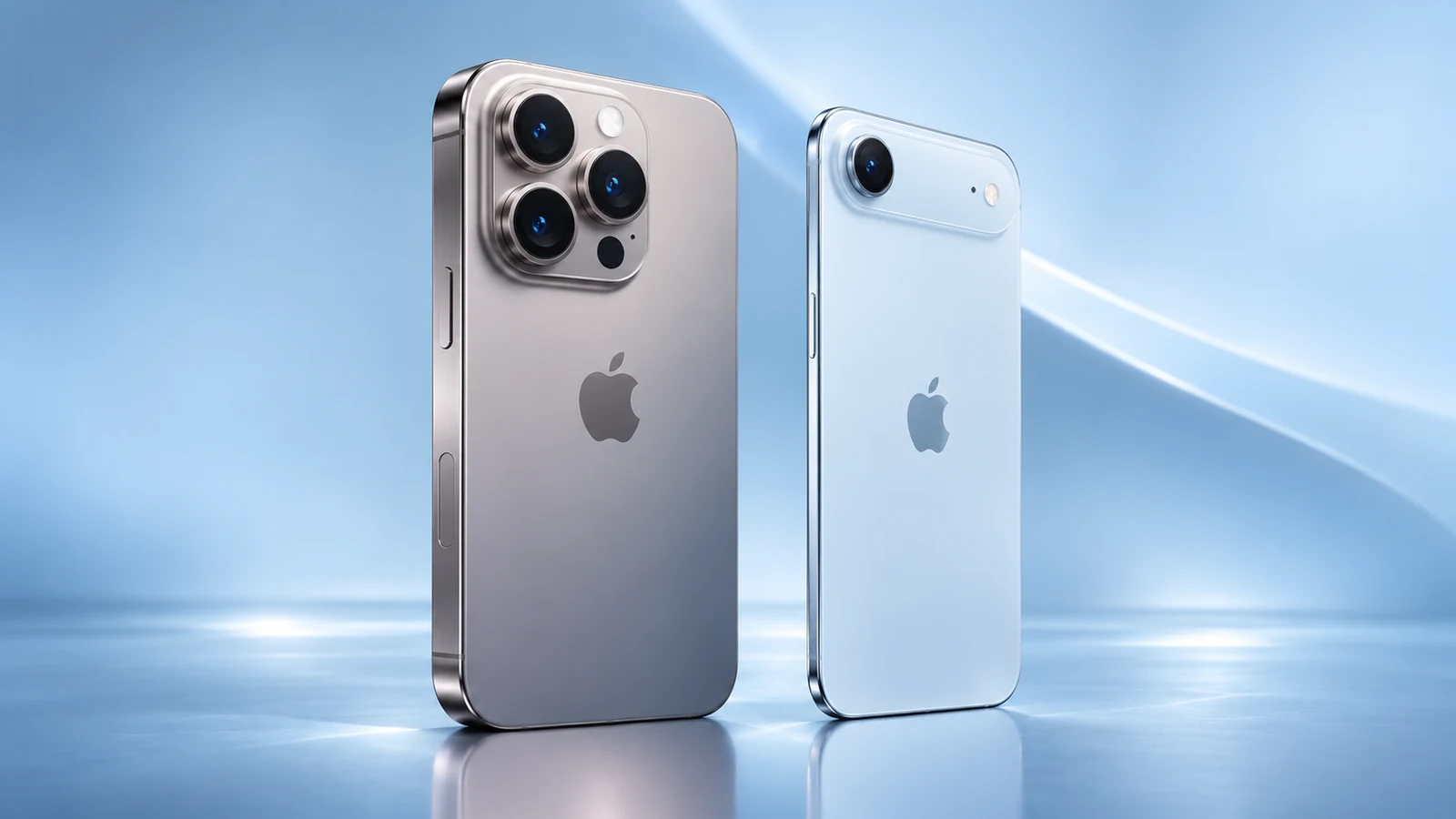
What makes the iPhone Air feel special before you even turn it on? A 5.64 mm profile, 165-gram weight and meticulous construction create an unusually tactile proposition. This article explores the attraction — without overlooking cameras, endurance and the limits of ultra-thin design.
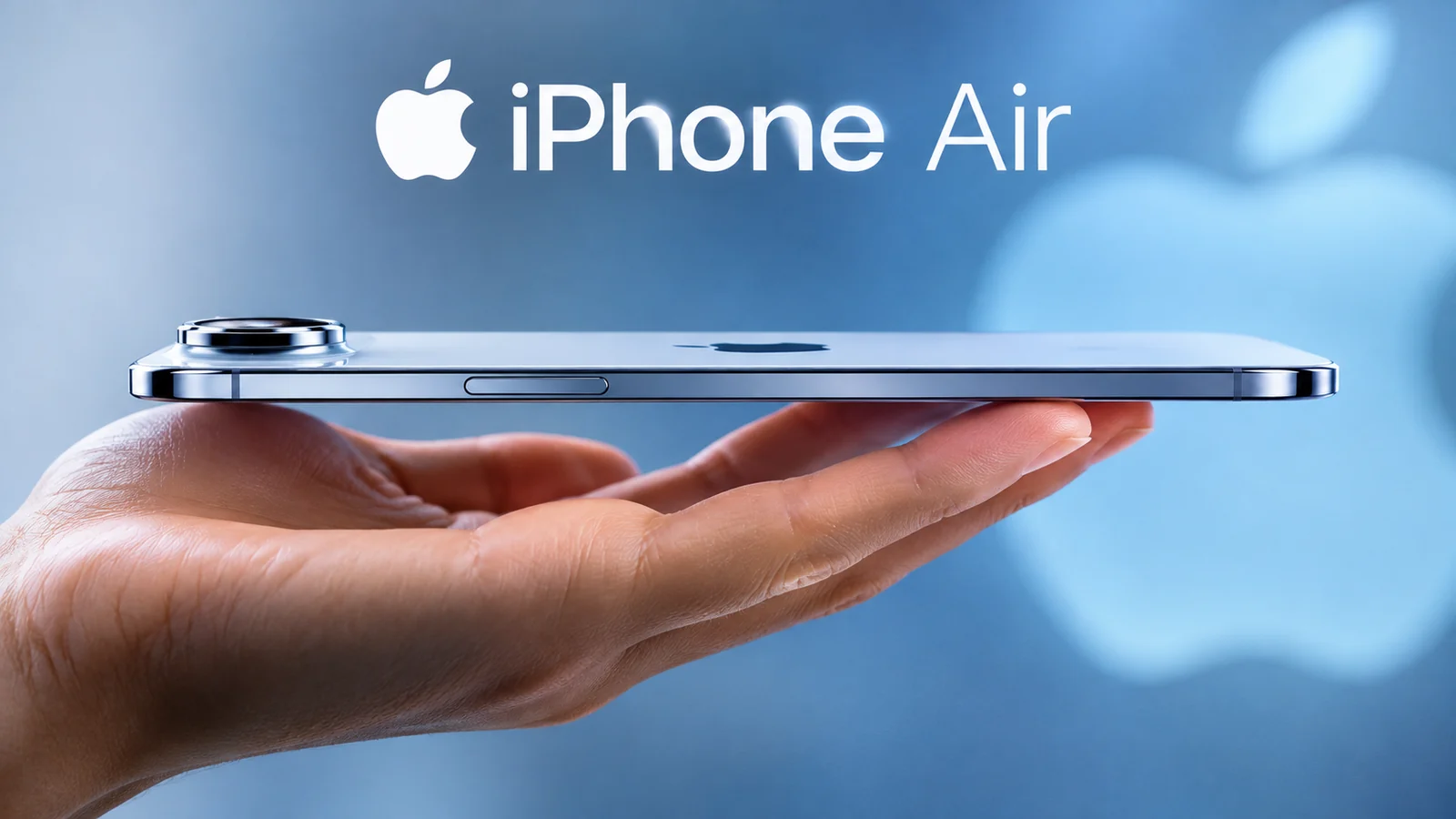
Editorial note. This is a documentary analysis of design and specifications, not an independent hands-on test. Subjective impressions are identified as such.
A question specifications cannot fully answer
Most smartphone reviews begin with processors, cameras, batteries and brightness. The iPhone Air reverses that order: its thickness, weight and physical presence attract attention before the specification sheet does. This does not mean feelings should replace a rational purchase decision. It means industrial design is part of a product’s practical usefulness.
Introduced in September 2025, Air occupies a distinct place in the iPhone family. At 5.64 mm thick and 165 grams, with a 6.5-inch OLED screen, it does not set out to maximise the number of components. It aims to combine a large viewing area with an unusually light, thin device. The important question is whose daily experience genuinely improves as a result.
The first touch: a benefit no photo can deliver
A photograph can show the side profile, but it cannot convey weight distribution, surface texture or how naturally the buttons fall beneath your fingers. When people pick up a phone, they compare it with devices they already know. An unexpected feeling of lightness may be more memorable than a modest processing improvement.
This matters for an object handled many times every day. Calls, reading on public transport and one-handed photographs are repeated actions. A lighter device may improve comfort, although not everyone will experience the same benefit. The most useful way to evaluate Air is to hold it in person, ideally both with and without the case you expect to use.
5.64 millimetres: hidden engineering
Making a thin smartphone is not simply a matter of removing material. Engineers must fit a battery, processor, modem, cameras, antennas and thermal management into a tighter package. Apple describes relocating key components to a raised rear plateau, freeing more internal space for the battery. This is a meaningful architectural choice, not merely a visual effect.
The official 5.64 mm measurement describes the main body, not the camera plateau or its thickness with a case attached. The result looks elegant, but every millimetre comes with design decisions about usable internal volume, rigidity, cooling and power. There is no such thing as a free reduction in thickness.
165 grams: why weight may matter more than a benchmark
At 165 grams, Air combines a relatively large display with a notably light body. Comfort depends not only on mass, but on balance, edge geometry and grip. A lighter phone is not automatically easier for every person to hold, particularly when different hand sizes and cases are considered.
For people who travel light or spend long periods reading, lower weight may remain valuable throughout the day. Those prioritising bigger batteries or specialist lenses may see the same reduction as an unwelcome trade-off. Weight matters when it improves an actual routine, not simply when it surprises someone for thirty seconds in a shop.
Titanium and glass: both visible and invisible choices
Apple specifies a grade 5 titanium frame, Ceramic Shield 2 on the front and Ceramic Shield on the back. These choices involve aesthetics, rigidity, surface protection and manufacturing complexity. The reflective finish and continuous lines give Air its recognisable look, while protective materials address the perceived fragility of extremely thin devices.
No material can make a smartphone impervious to scratches or drops. Real durability depends on device geometry, testing conditions and the accidents it encounters. A protective case may be sensible, but it also changes the tactile experience that makes Air distinctive. Buyers must balance design appreciation with how they use their phones.
Simplicity as a deliberate design language
At a time when many smartphone backs are dominated by large multi-camera arrays, Air offers a calmer visual composition. Its identity comes from proportion, clean lines and a concentrated camera area. For someone who values understated objects, this may feel more coherent than a conspicuous display of technical capability.
But simplicity is not evidence of superior performance. Fewer optical lenses reduce photographic flexibility. A restrained design is a product choice that highlights some qualities by compromising others. Its appeal is strongest when the manufacturer’s priorities match those of the owner.
A large display without a traditionally heavy phone
The 6.5-inch Super Retina XDR display supports adaptive ProMotion up to 120 Hz, HDR and always-on functionality. It suits reading, navigation, video and maps. Responsive scrolling and a generous viewing area can make ordinary tasks feel complete without the weight associated with bigger flagship devices.
That does not turn Air into a tablet or remove software and productivity limits. Intensive multitasking, lengthy writing and complex editing remain dependent on the platform and accessories. A large screen in a lighter body is a specific advantage, not a promise to replace an iPad or laptop.
Performance that should fade into the background
The A19 Pro, Apple-designed connectivity chips and iOS integration support a fast, predictable everyday experience. Messaging, browsing, casual photography, video and most popular apps demand much less power than the hardware can deliver. The value is often felt as the absence of friction, not as the highest score on a chart.
The slim enclosure still matters under sustained stress. Long gaming sessions and other processor-intensive workloads challenge thermal management. Independent reviews have identified constraints under heavy loads. It would be misleading to ignore them because the design is compelling. Match the product to the workloads that actually matter to you.
The cost of elegance: one rear camera
The 48 MP Fusion main camera supports a wide range of everyday scenes and sensor-crop framing. But one rear camera is not equivalent to dedicated ultrawide, macro and telephoto lenses. Landscape, architecture, distant action and wildlife photography can make this limitation obvious.
Independent reviewers have singled out reduced camera versatility as a major compromise next to Pro models. That does not mean Air cannot take excellent pictures; it defines what the camera system can and cannot do. Pixel count and optical flexibility are different things, and buyers should not confuse them.
Battery life: the opportunity cost of low weight
Apple rates Air for up to 27 hours of video playback under specified test conditions. Actual results depend on brightness, connectivity, apps, temperature and battery condition. A dedicated MagSafe battery can extend endurance but adds cost, weight and bulk — the very attributes the product works hard to reduce.
Moderate users may find a day of power entirely sufficient, while heavy users could prefer a larger device with more headroom. WIRED and Tom’s Guide both recognised the attraction of the industrial design while noting battery and feature trade-offs versus Pro devices. Consider your longest, most demanding day rather than an idealised usage scenario.
Why design can create an emotional connection
Some products appeal through the pleasure of using them, not just through a list of functions. Proportion, materials, button feedback, temperature to the touch and ease of carrying all shape perceived quality. In design research, these experiences form part of how people evaluate usefulness and satisfaction.
“Magic” is not a measurable smartphone specification, and it would be wrong to assume everybody feels the same way about Air. What can be evaluated is its clear proposition: thinness, lightness and simplicity are central to the product identity. Some customers value those characteristics enough to accept compromises. Others will lose enthusiasm when practical limitations emerge.
Air, iPhone 17 or 18 Pro: competing definitions of value
There is no universal ranking of best and worst across the iPhone range. Air emphasises portability and industrial design. iPhone 17 may provide a more economical balance and greater camera flexibility. iPhone 18 Pro targets advanced photography, endurance and intensive use. The choice depends on actual tasks and the relative value of each feature.
A practical approach is to rank three priorities before comparing prices: in-hand comfort, photography and battery life. Then decide which compromise you can tolerate for six months or longer. Choosing Air because it feels better to use can be perfectly reasonable if the trade-offs are understood. Choosing it only for exclusivity increases the chance of disappointment.
Does the magic last? The most useful conclusion
Air shows that innovation does not always mean adding more features. Sometimes it means rearranging technology so a product is easier and more pleasant to carry. The engineering may be difficult to appreciate at first glance, but the result is immediately tangible when someone picks up the phone.
That sensation alone does not make the price right for everyone. People needing ultrawide photography, maximum battery endurance or hours of sustained gaming have alternatives better matched to their needs. People prioritising a large screen in an unusually light and thin device will find a coherent proposition here. Its appeal is not perfection; it is clarity about what it sets out to be.
Frequently asked questions
Is iPhone Air really 5.64 mm thick?
Yes. Apple lists a 5.64 mm main body. The camera plateau and an added case change its effective thickness.
Why does iPhone Air weigh only 165 grams?
Its materials and internal architecture prioritise thinness and low mass. The official weight is 165 grams.
Is iPhone Air better than iPhone 18 Pro?
There is no universal answer. Air prioritises slimness and low weight; Pro models prioritise other functions including broader camera flexibility.
Can iPhone Air replace a multi-camera iPhone?
It handles many everyday scenes, but it lacks dedicated rear ultrawide and telephoto lenses.
Official technical documentation and independently published reviews. Last reviewed 11 November 2026.
The essential takeaway
The appeal of iPhone Air lies in a precise design priority: a large, capable screen in an exceptionally light, slim body. That priority can be valuable, but it does not remove the practical trade-offs. The right choice depends on the owner’s needs.