A practical look at total cost, updates and the features that actually matter.
Editorial note. This comparison weighs public specifications, usage profiles and buying criteria. It does not replace an independent hands-on test.
A common and rational decision
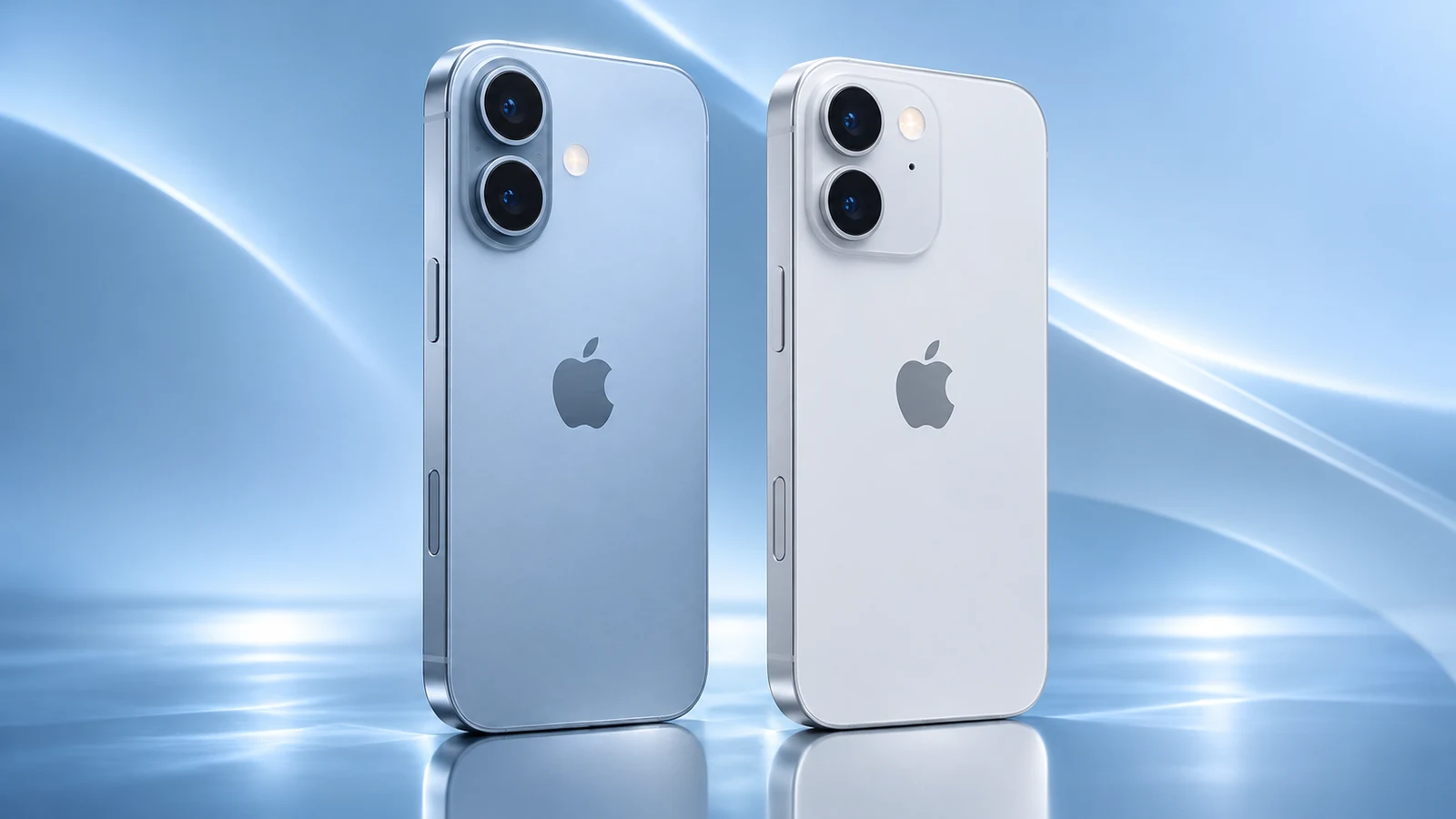
Among all possible comparisons, iPhone 16 vs. iPhone 17 is one of the most useful for real buyers. It speaks both to people who already own a fairly recent phone and wonder whether to upgrade, and to shoppers deciding whether the older generation now represents the better deal.
Unlike comparisons between completely different tiers, this one is mostly about value. The iPhone 17 promises visible improvements, but the iPhone 16 may still deliver most of what many people actually use.
So the key is not only which one is better. It is which one is smarter for your situation.
What the iPhone 17 adds
The iPhone 17 brings a 6.3-inch OLED display with ProMotion up to 120Hz, a 48MP Dual Fusion system with ultra-wide camera, an 18MP Center Stage front camera, the A19 chip and up to 30 hours of video playback. That paints a clearly ambitious non-Pro phone.
Compared with an iPhone 16, the iPhone 17’s main promise is a more modern-feeling experience: smoother motion, more flexible imaging and a more polished overall package.
If you want to feel a clear step forward, the iPhone 17 positions itself well.
When the iPhone 16 still makes sense
The iPhone 16 still makes sense in at least three scenarios: if you already own it and it still meets your needs, if its price drops enough to become a very efficient purchase, or if your usage remains fairly simple.
Generational gains are often real without being transformative for every buyer. If the 16 still feels fast and its battery is serving you well, holding on to it may be the more rational decision.
Likewise, buying a discounted or refurbished 16 can be smart if the price gap to the 17 becomes significant.
Display, camera and comfort
The iPhone 17 becomes more attractive if you value smoother interface feel and more flexible photography. ProMotion improves perceived quality every day, while the ultra-wide camera broadens what you can capture.
For some buyers, those gains are central. For others, they are welcome but not essential. The key is whether you use your phone in a way that will make those improvements tangible.
If you spend many hours on screen and enjoy photography beyond the basics, the 17 starts to pull away.
Total cost and replacement cycle
The price difference between generations should be judged alongside how long you plan to keep the phone. If you expect to use it for four or five years, the newer generation can make sense because you buy more time from the start.
If your budget is tighter or you replace phones more moderately, the iPhone 16 may represent better immediate value.
This is also where promotions, trade-ins and refurbished deals can completely shift the calculation.
Who should choose which one?
Choose the iPhone 17 if you want the most up-to-date, smoother and more camera-flexible option, and the extra cost is acceptable.
Choose the iPhone 16 if you want to spend less while keeping a still-capable experience, or if you already own one and do not feel real limitations.
This comparison depends heavily on budget context and slightly less on pure tech enthusiasm.
Verdict
The iPhone 17 is the stronger choice for overall experience and future headroom. The iPhone 16 remains the smarter option when cost matters more than owning the latest generation.
If you are buying now and the price gap is reasonable, the 17 is usually worth it. If the 16 is clearly cheaper and your needs are ordinary, it still deserves serious consideration.
In the end, this is not only about technology. It is about buying the right generation for your budget and replacement horizon.
Frequently asked questions
Is it worth upgrading from iPhone 16 to 17?
Mostly if you value smoother motion, more camera flexibility and plan to keep the new phone for several years.
Does buying an iPhone 16 still make sense?
Yes, especially if you find it at a meaningfully lower price and do not need the iPhone 17’s specific upgrades.
Which one balances cost and future value better?
Without a major discount on the iPhone 16, the iPhone 17 usually offers the better medium-term balance.
What to keep in mind
The best choice does not come from a spec sheet alone. It comes from the combination of budget, priorities and the way you really use your phone.